<< Prev Question Next Question >>
Question 13/33
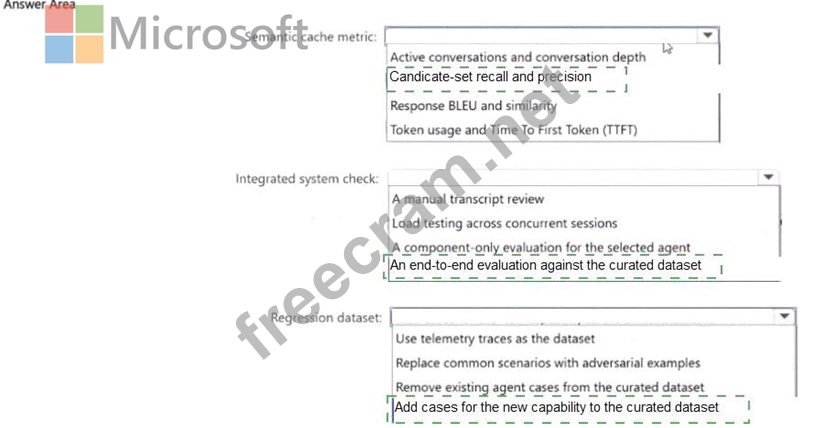
You have a Microsoft Foundry multi-agent solution. The solution includes an orchestrator that uses Azure Al Search as a semantic cache to shortlist agents and invokes the top match.
You have a version-controlled repository that contains a curated dataset, expected routing, and expected responses. A pull request adds an agent named Agent 1, new sample utterances, and a changed selector prompt.
You need to configure an automated prerelease evaluation gate for the pull request. The solution must meet the following requirements:
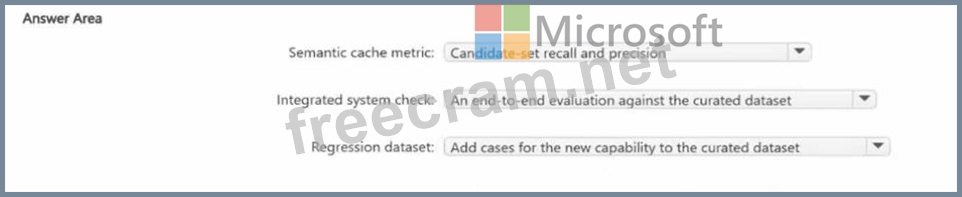
* Validate the integrated system response after the new agent is available to orchestration.
* Validate the semantic cache retrieval quality against the expected results.
* Keep regression tests aligned with the pull request changes.
How should you configure the evaluation gate? To answer, select the appropriate options in the answer area.
NOTE: Each correct selection is worth one point.
You have a version-controlled repository that contains a curated dataset, expected routing, and expected responses. A pull request adds an agent named Agent 1, new sample utterances, and a changed selector prompt.
You need to configure an automated prerelease evaluation gate for the pull request. The solution must meet the following requirements:
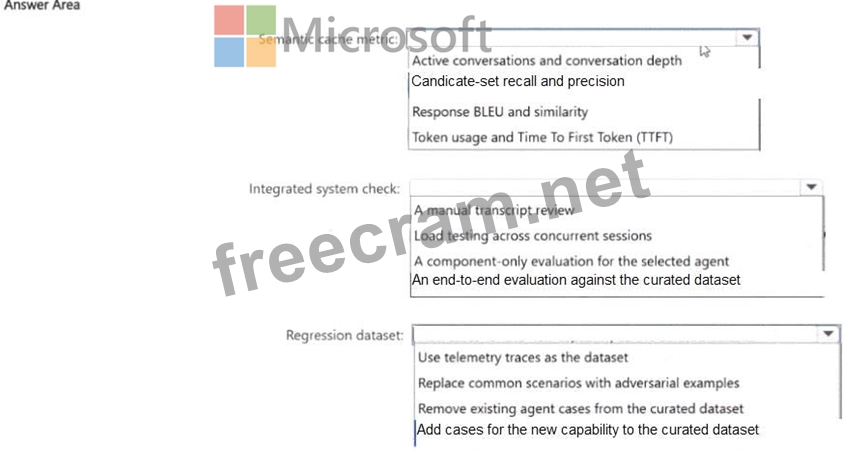
* Validate the integrated system response after the new agent is available to orchestration.
* Validate the semantic cache retrieval quality against the expected results.
* Keep regression tests aligned with the pull request changes.
How should you configure the evaluation gate? To answer, select the appropriate options in the answer area.
NOTE: Each correct selection is worth one point.