<< Prev Question Next Question >>
Question 22/33
You have a Microsoft Foundry multi-agent solution. The agents contain the CI/CD evaluation gates shown in the following table.

You call one of the agents by using the request context in the evaluation process as shown in the following table.

The agent receives the following results for the tool.
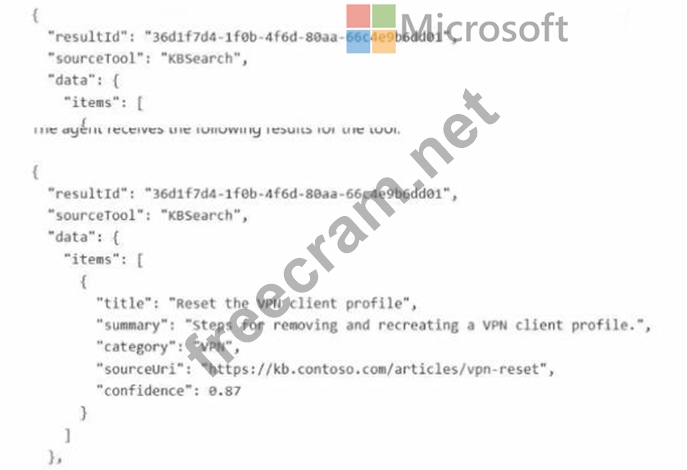
For each of the following statements, select Yes if the statement is true. Otherwise, select No. NOTE: Each correct selection is worth one point.
You call one of the agents by using the request context in the evaluation process as shown in the following table.
The agent receives the following results for the tool.
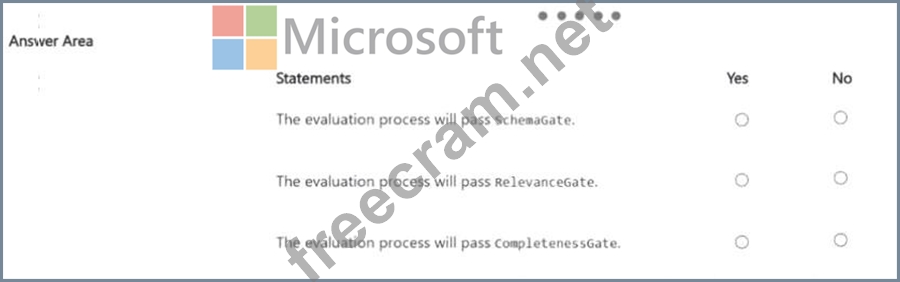
For each of the following statements, select Yes if the statement is true. Otherwise, select No. NOTE: Each correct selection is worth one point.


