<< Prev Question Next Question >>
Question 10/33
You have a Microsoft Foundry claims-assistance solution that includes a primary claims agent and three specialist agents. The primary claims agent invokes the specialist agents.
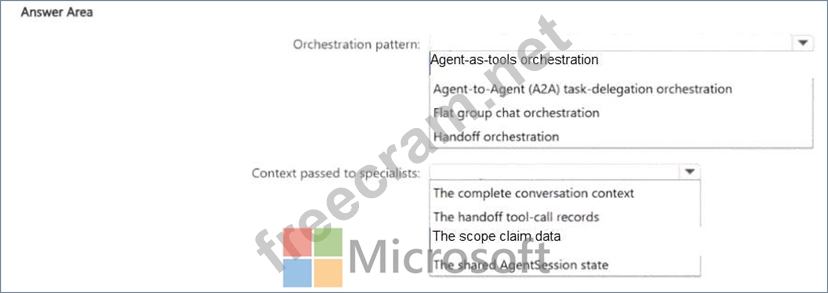
You need to recommend a coordination approach. The solution must meet the following requirements:
* The primary claims agent must retain ownership of the task and synthesize the final response.
* The specialist agents must have a least-privilege view of the claim for their assigned work.
What should you recommend? To answer, select the appropriate options in the answer area.
NOTE: Each correct selection is worth one point.
You need to recommend a coordination approach. The solution must meet the following requirements:
* The primary claims agent must retain ownership of the task and synthesize the final response.
* The specialist agents must have a least-privilege view of the claim for their assigned work.
What should you recommend? To answer, select the appropriate options in the answer area.
NOTE: Each correct selection is worth one point.




