- Home
- Cisco
- Implementing Cisco Video Network Devices (CIVND)
- Cisco.210-065.v2019-02-22.q235
- Question 151
Valid 210-065 Dumps shared by ExamDiscuss.com for Helping Passing 210-065 Exam! ExamDiscuss.com now offer the newest 210-065 exam dumps, the ExamDiscuss.com 210-065 exam questions have been updated and answers have been corrected get the newest ExamDiscuss.com 210-065 dumps with Test Engine here:
Access 210-065 Dumps Premium Version
(210 Q&As Dumps, 35%OFF Special Discount Code: freecram)
<< Prev Question Next Question >>
Question 151/235
Refer to the exhibit.
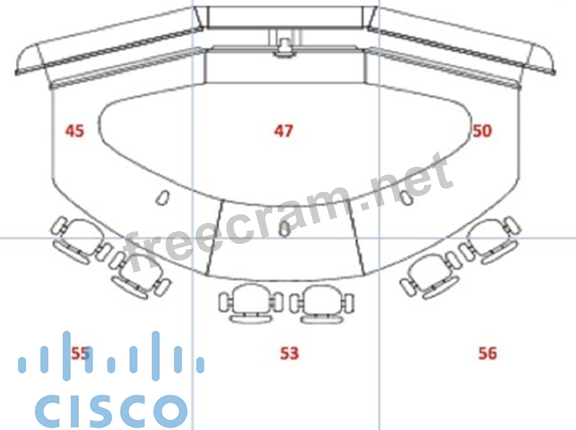
Acoustic measurements for ambient noise were taken on a candidate for an Immersive Cisco TelePresence room. The numbers on the floor plan represent the dBA readings for each of the six areas of the room.
Considering Cisco best practices, what can you conclude about the current acoustic situation in the room?
Acoustic measurements for ambient noise were taken on a candidate for an Immersive Cisco TelePresence room. The numbers on the floor plan represent the dBA readings for each of the six areas of the room.
Considering Cisco best practices, what can you conclude about the current acoustic situation in the room?
Correct Answer: A
Explanation/Reference:
Explanation:
High Ambient Noise Levels The background noise level should be less than 36 dBA and 54 dBC for a Cisco TelePresence room. This level is an ideal threshold for background noise in most audio-video communication environments. However, sound levels are usually higher in a commercial office environment. Because of this, Cisco recommends lowering background noise to at least 45 dBA and 60 dBC. The Cisco TelePresence system will continue to operate properly with background noise at even higher levels; however, the sound quality begins to suffer. Background noise above 45 dBA begins to compete with the intelligibility of human speech, and these noises become distracting for participants. The Cisco TelePresence system may be able to filter out the background noise for participants at the other end of the call, but the in-room experience is still degraded for the local participants, who must endure a meeting in a loud environment. In extreme cases, such as when background levels exceed 55 dBA for a sustained period of time, gating or sound-suppression effects may occur in the Cisco TelePresence audio.
These effects occur when the system can no longer distinguish between background noise and speech, ultimately causing the system to suppress most sound because it identifies that sound as background noise.
The most common causes of background noise are as follows:
● Noise from HVAC air movement
● Noise from HVAC machinery or other machinery
● External sounds such as street traffic
● Adjacent room noise (server rooms, break rooms, bathrooms, or kitchens) Reference: http://www.cisco.com/c/dam/en/us/solutions/collateral/collaboration-endpoints/c07-643449-
00_tp_dg.pdf
Explanation:
High Ambient Noise Levels The background noise level should be less than 36 dBA and 54 dBC for a Cisco TelePresence room. This level is an ideal threshold for background noise in most audio-video communication environments. However, sound levels are usually higher in a commercial office environment. Because of this, Cisco recommends lowering background noise to at least 45 dBA and 60 dBC. The Cisco TelePresence system will continue to operate properly with background noise at even higher levels; however, the sound quality begins to suffer. Background noise above 45 dBA begins to compete with the intelligibility of human speech, and these noises become distracting for participants. The Cisco TelePresence system may be able to filter out the background noise for participants at the other end of the call, but the in-room experience is still degraded for the local participants, who must endure a meeting in a loud environment. In extreme cases, such as when background levels exceed 55 dBA for a sustained period of time, gating or sound-suppression effects may occur in the Cisco TelePresence audio.
These effects occur when the system can no longer distinguish between background noise and speech, ultimately causing the system to suppress most sound because it identifies that sound as background noise.
The most common causes of background noise are as follows:
● Noise from HVAC air movement
● Noise from HVAC machinery or other machinery
● External sounds such as street traffic
● Adjacent room noise (server rooms, break rooms, bathrooms, or kitchens) Reference: http://www.cisco.com/c/dam/en/us/solutions/collateral/collaboration-endpoints/c07-643449-
00_tp_dg.pdf


- Question List (235q)
- Question 1: The user of a Cisco TelePresence MX300 wants to control the ...
- Question 2: Conference solution for video streaming: (Choose two)...
- Question 3: You want to find a list of all recent call attempts on a Cis...
- Question 4: An engineer must pull logs from a Cisco EX90 Codec for a Cal...
- Question 5: Video conference bridges accomplish their conferencing funct...
- Question 6: Which level of AES encryption does Cisco Unified Presence an...
- Question 7: Which Cisco TelePresence Multipoint Control Unit Layout view...
- Question 8: Which component provides flexible options for storing video ...
- Question 9: Refer to the exhibit. (Exhibit) An administrator is attempti...
- Question 10: A user is currently on a Cisco TelePresence call using a Tou...
- Question 11: An engineer is configuring VIP mode for a Cisco TelePresence...
- Question 12: A customer requests a configuration that enables users to ea...
- Question 13: How can you see ongoing call statistic on endpoint?...
- Question 14: Which three items should be considered when restoring a back...
- Question 15: How many participants if you have 20 licenses screen?...
- Question 16: Which type of Cisco VCS log shows call routing decisions tha...
- Question 17: In locally managed mode, what is the maximum number of 720p ...
- Question 18: What CLI command will enable access to the presentation devi...
- Question 19: ECDS is a solution that provides which of the following bene...
- Question 20: Which two features are available on a Cisco TelePresence Ser...
- Question 21: Which three options can initiate scheduled or rendezvous mee...
- Question 22: Which two layout or switching modes are supported with the C...
- Question 23: A network engineer is setting up a Cisco TelePresence Conten...
- Question 24: When a user attempts to sign in with a Jabber Video for Cisc...
- Question 25: Which two standards are supported for streaming live video o...
- Question 26: A technician is trying to troubleshoot real-time call inform...
- Question 27: Which two methods are used to navigate the menu options of a...
- Question 28: An engineer is deploying a Cisco TelePresence Touch 8 contro...
- Question 29: An engineer needs to configure a mobile device that register...
- Question 30: A new Cisco TelePresence MCU 5300 is being installed. The cu...
- Question 31: How does a Cisco TCS process incoming video calls?...
- Question 32: An engineer wants to manually assign the IP address on an Ci...
- Question 33: Which three of these are functions of the Cisco TelePresence...
- Question 34: Cascading feature with TP Conductor and TP Server has 2 limi...
- Question 35: Which two methods can be used to retrieve the status of a Ci...
- Question 36: Which two methods can be used to set the default call protoc...
- Question 37: Which two tools can be used to extract traces from a Cisco U...
- Question 38: Endpoint for immersive telepresence:...
- Question 39: You connect the camera cable to...
- Question 40: On a Cisco C-Series codec, where would a technician go to co...
- Question 41: How would an administrator reset a Cisco VCS Control applian...
- Question 42: Which light is recommended by cisco?...
- Question 43: An engineer wants to convert analog live video, streaming it...
- Question 44: An engineer is deploying Cisco Digital Media Players through...
- Question 45: Which four characteristics are associated with video? (Choos...
- Question 46: An engineer is configuring a Cisco TelePresence System endpo...
- Question 47: Which means this command: set audio aec enable?...
- Question 48: An end user is in Cisco TelePresence session with a remote p...
- Question 49: A network engineer wants to check the local system call ID o...
- Question 50: A client requires a versatile desktop video system that supp...
- Question 51: Refer to the exhibit. (Exhibit) You are deploying a Cisco VC...
- Question 52: Which two actions must take place for proper operation when ...
- Question 53: An engineer is backing up a VCS configuration. Which two met...
- Question 54: Which type of lighting is recommended for Cisco TelePresence...
- Question 55: An executive in XYZ Corporation wants to purchase a desktop ...
- Question 56: Refer to the exhibit. (Exhibit) The numbers on the floor pla...
- Question 57: Which three products are compatible with Digital Media Manag...
- Question 58: Which two Cisco TelePresence collaboration endpoints can imp...
- Question 59: The command xCommand Security FIPSMode Activate is issued to...
- Question 60: A Cisco engineer needs to provide digital media for the lobb...
- Question 61: A voice engineer installed and configured Cisco TMSXE in a W...
- Question 62: Refer to the exhibit. (Exhibit) Which option performs a fact...
- Question 63: Which desktop endpoint supports 802.3af PoE?...
- Question 64: Which personal Cisco TelePresence unit can be used as a repl...
- Question 65: In the web interface for a Cisco VCS or Expressway running X...
- Question 66: A customer wants a Cisco TelePresence MCU solution that supp...
- Question 67: An engineer is consistently seeing tickets in the Cisco TMS ...
- Question 68: Which function does BFCP provide?...
- Question 69: Which feature does Cisco VCS use to escalate a point-to-poin...
- Question 70: Which two statements about PoE support on Cisco Video Survei...
- Question 71: An engineer must ensure that a user can create content playl...
- Question 72: Which three features does a Cisco TelePresence Content Serve...
- Question 73: Which of the following will allow you to add a multipoint ca...
- Question 74: An engineer wants to know if there is a way to determine the...
- Question 75: Which command causes a Cisco VCS to drop registrations for c...
- Question 76: The microphone on a Cisco TelePresence System 3000 is switch...
- Question 77: A customer reports that in a CTS1300 room, a microphone swit...
- Question 78: Refer to the exhibit. When a user cannot log into the Cisco ...
- Question 79: On a video endpoint running TC software, which two SIP setti...
- Question 80: A customer wants to enable existing remote Cisco Jabber user...
- Question 81: Which codec is most suitable for a video streaming solution?...
- Question 82: Your customer reports that they have had unwanted calls rout...
- Question 83: Which optional feature is available for some video endpoints...
- Question 84: Refer to the exhibit. (Exhibit) Management would like to fin...
- Question 85: An engineer encounters video quality issues with an endpoint...
- Question 86: A network engineer is installing a Cisco TelePresence MX200 ...
- Question 87: The features that Telepresence Server has and MCU don't have...
- Question 88: In order to perform a password recovery for the admin user o...
- Question 89: An important Cisco TelePresence video multipoint call is in ...
- Question 90: While trying to register to Cisco UCM, a Cisco IP phone repo...
- Question 91: Which ad hoc multipoint feature is supported only when prope...
- Question 92: Which CTS software-based endpoint is an ideal solution for a...
- Question 93: When placing a Multiway call through a Cisco TelePresence Co...
- Question 94: What technology use for pair iPad and cisco room system:...
- Question 95: Refer to the exhibit. When this alarm is seen, what is the m...
- Question 96: A customer is looking for a Cisco TelePresence Immersive Sys...
- Question 97: A network administrator is troubleshooting a video issue fro...
- Question 98: A technician enters the diag system normal command for a Cis...
- Question 99: Refer to the exhibit. (Exhibit) Which system tab can be used...
- Question 100: A customer requires scheduled Cisco TelePresence video confe...
- Question 101: In which two locations can you find registration information...
- Question 102: Which three video endpoints can you set back to factory rese...
- Question 103: When you are on a call that is hosted on a Cisco TelePresenc...
- Question 104: An engineer is using a cascading feature with Cisco TelePres...
- Question 105: You are troubleshooting an issue and you need to connect to ...
- Question 106: Which call control device does the Cisco DX650 use?...
- Question 107: What is the proper procedure to manually reset a password on...
- Question 108: Which MCU supports the use of a lobby screen?...
- Question 109: Which function does FECC provide?...
- Question 110: A network engineer wants to quickly view any issues that may...
- Question 111: Refer to the exhibit. (Exhibit) Which CLI command should be ...
- Question 112: A Cisco EX60 is connected to the network, but users cannot m...
- Question 113: A manager requires multiparty video meetings with presentati...
- Question 114: Your customer has an EX60 at a home-office that is doing dir...
- Question 115: A network administrator is asked to configure a video confer...
- Question 116: Which technology can be used to pair an iPad with a Cisco ro...
- Question 117: A Cisco TelePresence EX Series desktop endpoint failed to re...
- Question 118: A new Cisco DX650 is not registering in the Cisco Communicat...
- Question 119: An engineer is connecting a VISCA cable. What is the purpose...
- Question 120: When an administrator schedules a conference, which three de...
- Question 121: Which option is an immersive endpoint?...
- Question 122: Which two feature keys are valid for both Cisco TelePresence...
- Question 123: Refer to the exhibit. (Exhibit) For Cisco TelePresence endpo...
- Question 124: Which two Cisco TelePresence protocols are supported for con...
- Question 125: Which codec represents video that is supported by Cisco Tele...
- Question 126: An end user using C series codec wants to change the partici...
- Question 127: A customer has a data and VoIP converged network and would l...
- Question 128: Which two methods can you use to update the configuration au...
- Question 129: Which type of conference must be booked through Cisco TMS wi...
- Question 130: Which bridge solution requires Cisco TelePresence Conductor?...
- Question 131: What is the maximum number of servers that a Cisco TelePrese...
- Question 132: A company is investigating the purchase of desktop video end...
- Question 133: A network engineer wants to perform a factory reset on a Cis...
- Question 134: A company just acquired cisco MCU 5300 for multi videoconfer...
- Question 135: Refer to the exhibit. (Exhibit) The customer recently connec...
- Question 136: A Cisco TelePresence Server is operating in locally managed ...
- Question 137: How to monitor events and alarms generated on CUCM?...
- Question 138: In a Cisco TelePresence conference that is hosted on a Cisco...
- Question 139: Which option is the Cisco recommended layout if cascading is...
- Question 140: When you add third party call what button you should press?...
- Question 141: An immersive video room requires acoustic remediation becaus...
- Question 142: What do you call the process when one bridge calls into anot...
- Question 143: You want to output SIP messaging to the console of a Cisco T...
- Question 144: An end user reports that the video they are receiving from a...
- Question 145: An engineer needs to configure cascading to support addition...
- Question 146: Refer to the exhibit. (Exhibit) A network engineer is attemp...
- Question 147: Cisco DX Series endpoints run on which operating system?...
- Question 148: Cisco inline power was replaced by which IEEE standard?...
- Question 149: If you use MSE 8710 how many ports by using 720p and softwar...
- Question 150: You are checking a DHCP server configuration for video endpo...
- Question 151: Refer to the exhibit. (Exhibit) Acoustic measurements for am...
- Question 152: An engineer is configuring mobile and remote access. Which t...
- Question 153: A video engineer has opened a ticket with Cisco TAC for supp...
- Question 154: Refer to the exhibit. (Exhibit) A call with a destination al...
- Question 155: Illumination for immersive telepresence:...
- Question 156: A video engineer needs to locate the running version of the ...
- Question 157: Which two endpoints support the multisite option? (Choose tw...
- Question 158: Jabber fail login with logs. What DNS SRV record need to res...
- Question 159: An engineer wants to stream Cisco TelePresence high-definiti...
- Question 160: An engineer needs to connect an external display to a Cisco ...
- Question 161: Which all-in-one dual-screen solution can be used for an ave...
- Question 162: In a Cisco TelePresence MX300 G2, what is the minimum bandwi...
- Question 163: An engineer is deploying a Cisco Media Experience Engine 350...
- Question 164: Which three Cisco TelePresence endpoints support hosting emb...
- Question 165: Which three features are supported by the Cisco Video Survei...
- Question 166: A customer wants to record Cisco TelePresence conferences wi...
- Question 167: Which path should you follow to initiate a Cisco Telepresenc...
- Question 168: An engineer is configuring a live stream from a multiparty c...
- Question 169: A desktop video endpoint is needed that can support a Precis...
- Question 170: Which option is the embedded component that enables endpoint...
- Question 171: A customer wants to know the options that are available when...
- Question 172: Your customer reports that new A/V equipment that plays movi...
- Question 173: When outside of the network, Cisco Jabber uses which of the ...
- Question 174: Components of Digital Media Suite for created playlists:...
- Question 175: What is the min distance for 52" monitor?...
- Question 176: Refer to the exhibit. (Exhibit) Which kind of profile is sho...
- Question 177: Which option describes how to configure SNMP settings on a C...
- Question 178: Which Cisco feature upscales SD and low-bandwidth video part...
- Question 179: A customer wants to purchase a video endpoint that supports ...
- Question 180: Which type of packet-oriented network has the characteristic...
- Question 181: Endpoints for immersive telepresence: (Choose three.)...
- Question 182: Which conference types can occur at anytime without the need...
- Question 183: Which Cisco DX series endpoint supports PoE?...
- Question 184: Refer to the exhibit. (Exhibit) An employee is reviewing the...
- Question 185: A customer owns three Codian 5300 MCUs with several video en...
- Question 186: Which Cisco DMS component is used for content recording?...
- Question 187: On the Cisco VCS-E, what is the default port number for the ...
- Question 188: Refer to the exhibit. (Exhibit) Which tab can be used in ord...
- Question 189: Which Cisco video endpoints run on the Android operating sys...
- Question 190: An engineer sees a video camera icon on the Cisco IP phone s...
- Question 191: Which three Cisco TelePresence endpoints are considered imme...
- Question 192: Which video input port is available on a Cisco DX80?...
- Question 193: Which two of these support an ad-hoc conference call? (Choos...
- Question 194: When you configure a zone for firewall traversal, which type...
- Question 195: XConfigurator Cameras Camera 1 Brightness Level 1 command ha...
- Question 196: Customer collaboration refers primarily to which of the foll...
- Question 197: Refer to the exhibit. (Exhibit) In the SDP that is displayed...
- Question 198: An engineer is receiving several Cisco TMS email alerts for ...
- Question 199: A video engineer configured Cisco TMS to allow conference sc...
- Question 200: Refer to the exhibit. (Exhibit) An H.323 endpoint that is re...
- Question 201: I release a value of acoustic 25 db at a distance of 1 foot....
- Question 202: Refer to the exhibit. (Exhibit) A company would like to add ...
- Question 203: Which standard will support call forwarding?...
- Question 204: Which CLI command must be used to configure the network sett...
- Question 205: A company acquired immersive Cisco TelePresence devices and ...
- Question 206: Which kind of cable is used to daisy chain one PrecisionHD c...
- Question 207: Which two codecs are supported on the Cisco Video Surveillan...
- Question 208: Which DHCP option is used by video endpoints to locate the C...
- Question 209: Which of the following first provided centralized call contr...
- Question 210: When you sign in at jabber what is the SIP message are used?...
- Question 211: In a Multiway call escalation, which SIP message is sent fro...
- Question 212: Refer to the exhibit. Users in a Cisco TelePresence room rep...
- Question 213: Refer to the exhibit. You are troubleshooting an issue invol...
- Question 214: An engineer is deploying a Cisco TelePresence Content Server...
- Question 215: A company wants to enable a mobile user to connect to the co...
- Question 216: Which Cisco MCU feature allows a video participant to dial i...
- Question 217: Refer to the exhibit. (Exhibit) A technician is reviewing th...
- Question 218: In this item, you will need to use all information presented...
- Question 219: An administrator is troubleshooting an endpoint with TC firm...
- Question 220: A user is unable to make a video call from an endpoint that ...
- Question 221: Refer to the exhibit. Which option enables you to create a s...
- Question 222: To which Ethernet port on a Cisco TelePresence System (500/1...
- Question 223: Which three standards are supported for streaming live video...
- Question 224: An engineer is configuring a Cisco TelePresence MX300 for re...
- Question 225: Which of these devices supports POE 802.1af?...
- Question 226: A network administrator is manually configuring a Cisco Tele...
- Question 227: Which function does a Cisco TCS recording alias perform?...
- Question 228: Cisco TelePresence Immersive Endpoint devices support a feat...
- Question 229: Which command returns the Cisco VCS to its factory default s...
- Question 230: Which two video endpoints can you set back to factory reset ...
- Question 231: Refer to the exhibit. (Exhibit) Which configuration element ...
- Question 232: On a Cisco EX90, if the camera is tilted downward toward the...
- Question 233: Which two options are characteristics of Cisco Jabber? (Choo...
- Question 234: A Cisco SX20 is registered to Cisco Unified Communications M...
- Question 235: A Cisco TelePresence System 1300 Series endpoint is in the p...
