Valid MS-203 Dumps shared by ExamDiscuss.com for Helping Passing MS-203 Exam! ExamDiscuss.com now offer the newest MS-203 exam dumps, the ExamDiscuss.com MS-203 exam questions have been updated and answers have been corrected get the newest ExamDiscuss.com MS-203 dumps with Test Engine here:
Access MS-203 Dumps Premium Version
(396 Q&As Dumps, 35%OFF Special Discount Code: freecram)
<< Prev Question Next Question >>
Question 149/157
Your company has three departments name Dept1, Dept2. and Dept3 and a Microsoft Exchange Online tenant.
You need to increase security for the email messages sent from the departments. The solution must meet the following requirements:
+ Users in Dept1 must be able to digitally sign and encrypt email messages as required.
+ Email messages sent from Dept2 to an external email domain must be encrypted automatically during transit only.
+ Email messages sent from Dept3 to an external email domain must be encrypted until the recipient opens the message.
+ Implementation costs must be minimized.
'Which type of encryption should you use for each department? To answer, drag the appropriate encryption types to the correct departments. Each encryption type may be used
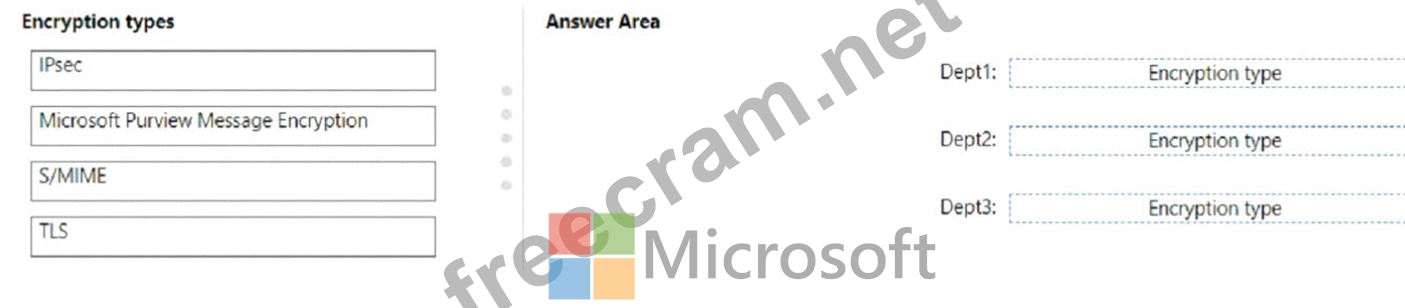
You need to increase security for the email messages sent from the departments. The solution must meet the following requirements:
+ Users in Dept1 must be able to digitally sign and encrypt email messages as required.
+ Email messages sent from Dept2 to an external email domain must be encrypted automatically during transit only.
+ Email messages sent from Dept3 to an external email domain must be encrypted until the recipient opens the message.
+ Implementation costs must be minimized.
'Which type of encryption should you use for each department? To answer, drag the appropriate encryption types to the correct departments. Each encryption type may be used
Correct Answer:
Explanation
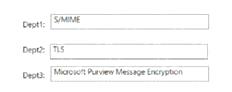
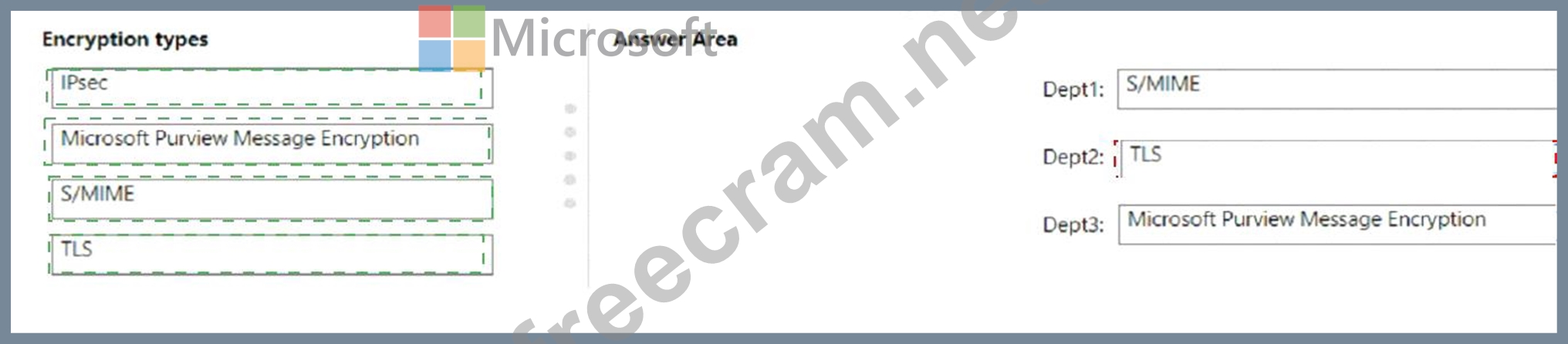
Users in Dept1 should use S/MIME encryption1. S/MIME is a standard for public key encryption and signing of email messages1. It allows users to digitally sign and encrypt email messages as required using certificates1. S/MIME provides end-to-end encryption and ensures message integrity and sender authentication1.
Email messages sent from Dept2 to an external email domain should use TLS encryption1. TLS is a protocol that encrypts the connection or session between two servers1. It protects email messages during transit only and does not require any action from the sender or recipient1. TLS provides opportunistic encryption and ensures message confidentiality and server authentication1.
Email messages sent from Dept3 to an external email domain should use Microsoft Purview Message Encryption2. Microsoft Purview Message Encryption is an online service that encrypts email messages and attachments using rights management policies2. It allows users to send encrypted email messages to anyone inside or outside the organization using various email services2. Microsoft Purview Message Encryption provides persistent encryption and ensures message confidentiality and authorization policies2.


- Question List (157q)
- Question 1: You have a Microsoft Exchange Online tenant. You need to ens...
- Question 2: You have a Microsoft Exchange Online tenant. You plan to use...
- Question 3: You have a Microsoft Exchange Online tenant that contains a ...
- Question 4: You have a Microsoft Exchange Online tenant. All users are a...
- Question 5: Note: This question is part of a series of questions that pr...
- Question 6: Allan Deyoung must perform a message trace of the email mess...
- Question 7: You have a Microsoft Exchange Server 2019 hybrid deployment....
- Question 8: Your company has a Microsoft Exchange Server 2019 organizati...
- Question 9: You have a Microsoft Exchange Server 2019 organization. You ...
- Question 10: You have 1,000 user accounts that are each licensed for Micr...
- Question 11: You have a Microsoft Exchange Server 2019 hybrid deployment....
- Question 12: You have a Microsoft Exchange Online tenant. You need to imp...
- Question 13: You have a hybrid deployment between a Microsoft Exchange On...
- Question 14: You have a Microsoft 365 ES subscription that contains a Mic...
- Question 15: You discover that email messages sent to contoso.com are NOT...
- Question 16: Note: This question is part of a series of questions that pr...
- Question 17: You have a hybrid deployment that contains a Microsoft Excha...
- Question 18: Your company has a Microsoft Exchange Server 2019 hybrid dep...
- Question 19: You have a Microsoft Exchange Online tenant. You need to con...
- Question 20: You have a Microsoft 365 subscription. You need to modify th...
- Question 21: Please wait while the virtual machine loads. Once loaded, yo...
- Question 22: You have a Microsoft Exchange Online tenant that contains a ...
- Question 23: You manage a Microsoft Exchange Server 2019 organization tha...
- Question 24: Note: This question is part of a series of questions that pr...
- Question 25: Your network contains an on-premises Active Directory Forest...
- Question 26: Note: This question is part of a series of questions that pr...
- Question 27: You have a Microsoft Exchange Online tenant. Users report th...
- Question 28: Please wait while the virtual machine loads. Once loaded, yo...
- Question 29: You need to implement a solution to meet the technical requi...
- Question 30: have a Microsoft Exchange Online tenant. All mailboxes ug a ...
- Question 31: You manage a Microsoft Exchange Online subscription. You use...
- Question 32: You have a Microsoft Exchange Online tenant that uses an ema...
- Question 33: You have two servers named EXCH1 and EXCH2 that run Windows ...
- Question 34: You have a Microsoft Exchange Server 2016 hybrid deployment....
- Question 35: Please wait while the virtual machine loads. Once loaded, yo...
- Question 36: You are evaluating the email hygiene configuration of a Micr...
- Question 37: You have a Microsoft Exchange Online tenant that contains th...
- Question 38: You have a Microsoft Exchange Online tenant that contains a ...
- Question 39: Note: This question is part of a series of questions that pr...
- Question 40: You have an on-premises Microsoft Exchange Server 2019 organ...
- Question 41: You have an Exchange Online tenant that contains several hun...
- Question 42: You have a hybrid deployment between a Microsoft Exchange On...
- Question 43: You have a Microsoft Exchange Server 2019 organization and a...
- Question 44: You have a Microsoft Exchange Online tenant. From a computer...
- Question 45: You have a Microsoft Exchange Online tenant that contains a ...
- Question 46: You have a Microsoft Exchange Online tenant. All users use a...
- Question 47: You have a hybrid deployment between a Microsoft Exchange On...
- Question 48: You have a Microsoft Exchange Online tenant. You need to be ...
- Question 49: Note: This question is part of a series of questions that pr...
- Question 50: Note: This question is part of a series of questions that pr...
- Question 51: Your network contains an Active Directory domain and an Azur...
- Question 52: Note: This question is part of a series of questions that pr...
- Question 53: You have a Microsoft Exchange Online tenant and the devices ...
- Question 54: Please wait while the virtual machine loads. Once loaded, yo...
- Question 55: Please wait while the virtual machine loads. Once loaded, yo...
- Question 56: You have a Microsoft Exchange Online tenant. Users use Micro...
- Question 57: You have a Microsoft Exchange Online tenant named contoso.co...
- Question 58: You have a Microsoft Exchange Online tenant that contains an...
- Question 59: Your company named Contoso, Ltd. has a Microsoft Exchange Se...
- Question 60: You have distribution group named Car Parking Distribution G...
- Question 61: You have a Microsoft 365 subscription that has Microsoft Def...
- Question 62: Your network contains an Active Directory domain named conto...
- Question 63: You have a Microsoft Exchange Online tenant that contains tw...
- Question 64: You have a Microsoft Exchange Online tenant. You need to add...
- Question 65: You have a Microsoft 365 subscription that contains the mail...
- Question 66: Please wait while the virtual machine loads. Once loaded, yo...
- Question 67: You have a Microsoft Exchange Server 2019 organization. You ...
- Question 68: You have a Microsoft Exchange Server 2019 hybrid deployment....
- Question 69: You have a Microsoft Exchange Server 2019 organization. You ...
- Question 70: You need to identify the contents of the FabrikamProject pub...
- Question 71: Your company has a Microsoft Exchange Online subscription fo...
- Question 72: You need to identify which users clicked the links in the ph...
- Question 73: You have two mailboxes named Mailbox1 and Mailbox2 that have...
- Question 74: You have a Microsoft Exchange Online tenant. The Exchange or...
- Question 75: Note: This question is part of a series of questions that pr...
- Question 76: You have a Microsoft 365 subscription. Several users report ...
- Question 77: You need to generate a report for the mobile devices that me...
- Question 78: You purchase a Microsoft 365 subscription. You create mailbo...
- Question 79: You recently implemented a hybrid deployment that contains a...
- Question 80: You have a hybrid deployment between a Microsoft Exchange On...
- Question 81: Please wait while the virtual machine loads. Once loaded, yo...
- Question 82: You have a Microsoft Exchange Online tenant that contains 1,...
- Question 83: You have a Microsoft Exchange Online tenant. All users have ...
- Question 84: You have an on-premises Microsoft Exchange Server 2019 organ...
- Question 85: You have a Microsoft Exchange Server 2019 organization. You ...
- Question 86: Your company has a Microsoft Exchange Server 2019 organizati...
- Question 87: Your company has a Microsoft Exchange Server 2019 hybrid dep...
- Question 88: For each of the following statements, select Yes if the stat...
- Question 89: You have a Microsoft Exchange Online tenant named contoso.co...
- Question 90: You have a Microsoft Exchange Server 2019 organization that ...
- Question 91: You have a hybrid deployment between a Microsoft Exchange On...
- Question 92: Your company has an Exchange Server 2019 organization that h...
- Question 93: You need to implement a solution that meets the technical re...
- Question 94: Note: This question is part of a series of questions that pr...
- Question 95: You need to implement a solution to support the planned chan...
- Question 96: You need to configure the environment to support the planned...
- Question 97: Use the drop-down menus to select the answer choice that com...
- Question 98: You have a Microsoft 365 tenant that contains a user named U...
- Question 99: You have a Microsoft Exchange Online tenant. All users are a...
- Question 100: Your network contains an Active Directory domain named corp....
- Question 101: Your company has a partnership with another company named co...
- Question 102: Your company named Contoso, Ltd. has a Microsoft Exchange On...
- Question 103: Your company has a Microsoft Exchange Server 2019 hybrid dep...
- Question 104: Note: This question is part of a series of questions that pr...
- Question 105: You have a Microsoft Exchange Online tenant that contains a ...
- Question 106: You have a Microsoft Exchange Online tenant. The tenant has ...
- Question 107: You run several PowerShell commands as shown in the followin...
- Question 108: All email sent by the users in fabrikam.com to orders@contos...
- Question 109: You have a Microsoft Exchange Online tenant that uses a thir...
- Question 110: You have a Microsoft Exchange Online tenant. You enable hier...
- Question 111: You have a Microsoft Exchange Online tenant that contains a ...
- Question 112: You have a Microsoft Exchange Online tenant. You receive an ...
- Question 113: You have an on-premises Microsoft Exchange Server 2019 organ...
- Question 114: You have a Microsoft Exchange Server 2019 organization. User...
- Question 115: Note: This question is part of a series of questions that pr...
- Question 116: You have a Microsoft Exchange Online tenant that uses a thir...
- Question 117: You have a Microsoft Exchange Online tenant named contoso.co...
- Question 118: You plan to migrate to Microsoft Exchange Online. The soluti...
- Question 119: Your company has a Microsoft Exchange Server 2019 hybrid dep...
- Question 120: How many default policy tags (DPTs), retention policy tags (...
- Question 121: You have a hybrid deployment of Microsoft Exchange Server 20...
- Question 122: You have a Microsoft Exchange Online subscription. You run t...
- Question 123: Please wait while the virtual machine loads. Once loaded, yo...
- Question 124: You have hybrid deployment between a Microsoft Exchange Onli...
- Question 125: You have a Microsoft Exchange Online tenant that contains tw...
- Question 126: You have a hybrid deployment between a Microsoft Exchange On...
- Question 127: You have a Microsoft 365 subscription. A safe attachments po...
- Question 128: You have a Microsoft Exchange Online tenant as shown in the ...
- Question 129: You have a Microsoft Exchange Online tenant that uses Micros...
- Question 130: You need to configure the new smartboard to support the plan...
- Question 131: You have a Microsoft Exchange Online tenant. A user reports ...
- Question 132: You have a Microsoft Exchange Online tenant. You need to cre...
- Question 133: You have a Microsoft Exchange Online tenant that contains 1,...
- Question 134: You have a Microsoft Exchange Online tenant that contains th...
- Question 135: Please wait while the virtual machine loads. Once loaded, yo...
- Question 136: You have a Microsoft Exchange Server 2019 hybrid deployment ...
- Question 137: Your company has an Exchange Online tenant. A partner compan...
- Question 138: You plan to use the Hybrid Agent to integrate your Microsoft...
- Question 139: You have a hybrid deployment of Microsoft Exchange Server 20...
- Question 140: Note: This question is part of a series of questions that pr...
- Question 141: You have a Microsoft Exchange Online tenant that contains a ...
- Question 142: Note: This question is part of a series of questions that pr...
- Question 143: You have hybrid deployment between a Microsoft Exchange Onln...
- Question 144: You have a Microsoft Exchange Server 2019 organization. You ...
- Question 145: You have a Microsoft Exchange Online tenant that contains a ...
- Question 146: You have a Microsoft Exchange Online subscription. You need ...
- Question 147: You have an address book policy named Contoso-US that contai...
- Question 148: You have a Microsoft Exchange Server 2019 organization that ...
- Question 149: Your company has three departments name Dept1, Dept2. and De...
- Question 150: Note: This question is part of a series of questions that pr...
- Question 151: You have a Microsoft Exchange Server 2019 organization named...
- Question 152: You have Microsoft Exchange Online tenant that uses Microsof...
- Question 153: Your company has a department named Deptl. You have a Micros...
- Question 154: You have a Microsoft Exchange Online tenant that contains a ...
- Question 155: You have 1,000 user accounts that are each licensed for Micr...
- Question 156: You need to recommend a solution for the public folders that...
- Question 157: Please wait while the virtual machine loads. Once loaded, yo...
