- Home
- MuleSoft
- MuleSoft Certified Integration Architect - Level 1
- MuleSoft.MCIA-Level-1.v2023-08-10.q194
- Question 21
Valid MCIA-Level-1 Dumps shared by ExamDiscuss.com for Helping Passing MCIA-Level-1 Exam! ExamDiscuss.com now offer the newest MCIA-Level-1 exam dumps, the ExamDiscuss.com MCIA-Level-1 exam questions have been updated and answers have been corrected get the newest ExamDiscuss.com MCIA-Level-1 dumps with Test Engine here:
Access MCIA-Level-1 Dumps Premium Version
(275 Q&As Dumps, 35%OFF Special Discount Code: freecram)
<< Prev Question Next Question >>
Question 21/194
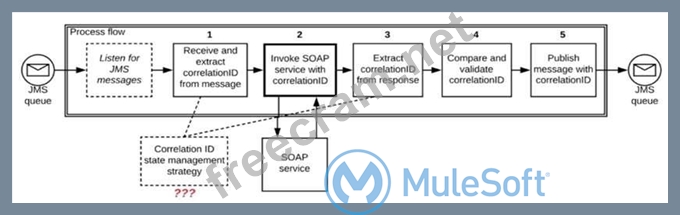
Refer to the exhibit. A Mule application is deployed to a multi-node Mule runtime cluster. The Mule application uses the competing consumer pattern among its cluster replicas to receive JMS messages from a JMS queue.
To process each received JMS message, the following steps are performed in a flow:
Step 1: The JMS Correlation ID header is read from the received JMS message.
Step 2: The Mule application invokes an idempotent SOAP webservice over HTTPS, passing the JMS Correlation ID as one parameter in the SOAP request.
Step 3: The response from the SOAP webservice also returns the same JMS Correlation ID.
Step 4: The JMS Correlation ID received from the SOAP webservice is validated to be identical to the JMS Correlation ID received in Step 1.
Step 5: The Mule application creates a response JMS message, setting the JMS Correlation ID message header to the validated JMS Correlation ID and publishes that message to a response JMS queue.
Where should the Mule application store the JMS Correlation ID values received in Step 1 and Step 3 so that the validation in Step 4 can be performed, while also making the overall Mule application highly available, fault- tolerant, performant, and maintainable?
To process each received JMS message, the following steps are performed in a flow:
Step 1: The JMS Correlation ID header is read from the received JMS message.
Step 2: The Mule application invokes an idempotent SOAP webservice over HTTPS, passing the JMS Correlation ID as one parameter in the SOAP request.
Step 3: The response from the SOAP webservice also returns the same JMS Correlation ID.
Step 4: The JMS Correlation ID received from the SOAP webservice is validated to be identical to the JMS Correlation ID received in Step 1.
Step 5: The Mule application creates a response JMS message, setting the JMS Correlation ID message header to the validated JMS Correlation ID and publishes that message to a response JMS queue.
Where should the Mule application store the JMS Correlation ID values received in Step 1 and Step 3 so that the validation in Step 4 can be performed, while also making the overall Mule application highly available, fault- tolerant, performant, and maintainable?
Correct Answer: C


- Question List (194q)
- 1 commentQuestion 1: A mule application uses an HTTP request operation to involve...
- Question 2: Refer to the exhibit. This Mule application is deployed to m...
- 1 commentQuestion 3: Refer to the exhibit. A Mule application is deployed to a cl...
- 1 commentQuestion 4: What is required before an API implemented using the compone...
- Question 5: A system API EmployeeSAPI is used to fetch employee's data f...
- 1 commentQuestion 6: An organization has implemented the cluster with two custome...
- 1 commentQuestion 7: An integration Mute application is being designed to process...
- Question 8: Refer to the exhibit. (Exhibit) Anypoint Platform supports r...
- 1 commentQuestion 9: A set of integration Mule applications, some of which expose...
- Question 10: An external REST client periodically sends an array of recor...
- Question 11: During a planning session with the executive leadership, the...
- Question 12: An integration Mute application is being designed to process...
- Question 13: What is true about automating interactions with Anypoint Pla...
- Question 14: A company is implementing a new Mule application that suppor...
- Question 15: Anypoint Exchange is required to maintain the source code of...
- Question 16: What requires configuration of both a key store and a trust ...
- 1 commentQuestion 17: An organization has deployed both Mule and non-Mule API impl...
- 1 commentQuestion 18: Refer to the exhibit. (Exhibit) A business process involves ...
- Question 19: A mule application is deployed to a Single Cloudhub worker a...
- Question 20: What operation can be performed through a JMX agent enabled ...
- 1 commentQuestion 21: Refer to the exhibit. A Mule application is deployed to a mu...
- Question 22: A global, high-volume shopping Mule application is being bui...
- Question 23: What requires configuration of both a key store and a trust ...
- 1 commentQuestion 24: An organization currently uses a multi-node Mule runtime dep...
- 1 commentQuestion 25: In Anypoint Platform, a company wants to configure multiple ...
- Question 26: An Order microservice and a Fulfillment microservice are bei...
- Question 27: Mule application A receives a request Anypoint MQ message RE...
- Question 28: An insurance company is using a CIoudHub runtime plane. As a...
- Question 29: An organization has several APIs that accept JSON data over ...
- 1 commentQuestion 30: An external REST client periodically sends an array of recor...
- Question 31: An organization will deploy Mule applications to Cloudhub, B...
- Question 32: Mule applications need to be deployed to CloudHub so they ca...
- Question 33: An Order microservice and a Fulfillment microservice are bei...
- Question 34: According to MuleSoft's API development best practices, whic...
- Question 35: Refer to the exhibit. A Mule application is being designed t...
- Question 36: Refer to the exhibit. (Exhibit) One of the backend systems i...
- 1 commentQuestion 37: A set of integration Mule applications, some of which expose...
- Question 38: An organization is designing a Mule application to periodica...
- Question 39: A Mule application uses the Database connector. What conditi...
- Question 40: An integration architect is designing an API that must accep...
- 1 commentQuestion 41: A retailer is designing a data exchange interface to be used...
- Question 42: An organization is not meeting its growth and innovation obj...
- Question 43: What is required before an API implemented using the compone...
- Question 44: An API has been updated in Anypoint Exchange by its API prod...
- 1 commentQuestion 45: An Order microservice and a Fulfillment microservice are bei...
- Question 46: An organization's security policies mandate complete control...
- Question 47: A mule application is deployed to a Single Cloudhub worker a...
- Question 48: An Order microservice and a Fulfillment microservice are bei...
- Question 49: Which type of communication is managed by a service mesh in ...
- 1 commentQuestion 50: Additional nodes are being added to an existing customer-hos...
- 1 commentQuestion 51: What aspects of a CI/CD pipeline for Mule applications can b...
- Question 52: According to MuteSoft, which principle is common to both Ser...
- 1 commentQuestion 53: In Anypoint Platform, a company wants to configure multiple ...
- Question 54: Refer to the exhibit. A Mule application is being designed t...
- Question 55: The implementation of a Process API must change. What is a v...
- Question 56: An external REST client periodically sends an array of recor...
- Question 57: Refer to the exhibit. (Exhibit) One of the backend systems i...
- Question 58: An organization's IT team must secure all of the internal AP...
- Question 59: What aspects of a CI/CD pipeline for Mute applications can b...
- 1 commentQuestion 60: The ABC company has an Anypoint Runtime Fabric on VMs/Bare M...
- 1 commentQuestion 61: An organization has decided on a cloudhub migration strategy...
- Question 62: Which component of Anypoint platform belongs to the platform...
- Question 63: Refer to the exhibit. (Exhibit) An organization is sizing an...
- Question 64: Refer to the exhibit. (Exhibit) The HTTP Listener and the Lo...
- Question 65: An organization is designing a mule application to support a...
- Question 66: According to MuleSoft's recommended REST conventions, which ...
- 1 commentQuestion 67: A Mule application is deployed to a cluster of two(2) cusomt...
- Question 68: Refer to the exhibit. (Exhibit) A shopping cart checkout pro...
- 2 commentQuestion 69: Mule applications need to be deployed to CloudHub so they ca...
- Question 70: Additional nodes are being added to an existing customer-hos...
- Question 71: What comparison is true about a CloudHub Dedicated Load Bala...
- Question 72: An organization uses a four(4) node customer hosted Mule run...
- Question 73: A Mule application is being designed to perform product orch...
- Question 74: Refer to the exhibit. (Exhibit) Anypoint Platform supports r...
- Question 75: What are two reasons why a typical MuleSoft customer favors ...
- Question 76: An ABC Farms project team is planning to build a new API tha...
- Question 77: A MuteSoft developer must implement an API as a Mule applica...
- Question 78: Refer to the exhibit. Anypoint Platform supports role-based ...
- Question 79: A project uses Jenkins to implement CI/CD process. It was ob...
- Question 80: A platform architect includes both an API gateway and a serv...
- Question 81: Refer to the exhibit. An organization is designing a Mule ap...
- Question 82: A Mule application uses the Database connector. What conditi...
- Question 83: According to the Internet Engineering Task Force (IETF), whi...
- Question 84: A Mule application name Pub uses a persistence object store....
- Question 85: Refer to the exhibit. (Exhibit) A Mule application is deploy...
- Question 86: An organization has strict unit test requirement that mandat...
- 1 commentQuestion 87: What operation can be performed through a JMX agent enabled ...
- Question 88: Refer to the exhibit. (Exhibit) A Mule application is deploy...
- Question 89: An API has been unit tested and is ready for integration tes...
- Question 90: A Mule application contains a Batch Job with two Batch Steps...
- Question 91: Refer to the exhibit. A Mule application is being designed t...
- Question 92: A company is planning to extend its Mule APIs to the Europe ...
- 1 commentQuestion 93: An Order microservice and a Fulfillment microservice are bei...
- Question 94: Refer to the exhibit. (Exhibit) A Mule application has an HT...
- Question 95: Refer to the exhibit. (Exhibit) An organization is sizing an...
- Question 96: An organization is using Mulesoft cloudhub and develops API'...
- Question 97: A Mule application name Pub uses a persistence object store....
- Question 98: Refer to the exhibit. (Exhibit) A business process involves ...
- Question 99: A company is planning to migrate its deployment environment ...
- 1 commentQuestion 100: A Mule application is synchronizing customer data between tw...
- Question 101: In Anypoint Platform, a company wants to configure multiple ...
- Question 102: An organization is designing an integration solution to repl...
- Question 103: Refer to the exhibit. (Exhibit) An organization deploys mult...
- Question 104: A Mule application is deployed to a cluster of two(2) cusomt...
- 1 commentQuestion 105: A retailer is designing a data exchange interface to be used...
- 1 commentQuestion 106: Refer to the exhibit. (Exhibit) This Mule application is dep...
- Question 107: An API implementation is being developed to expose data from...
- 1 commentQuestion 108: An organization currently uses a multi-node Mule runtime dep...
- Question 109: What is an example of data confidentiality?...
- Question 110: An insurance company is implementing a MuleSoft API to get i...
- 1 commentQuestion 111: Refer to the exhibit. (Exhibit) One of the backend systems i...
- Question 112: A global organization operates datacenters in many countries...
- Question 113: What Anypoint Connectors support transactions?...
- Question 114: An application load balancer routes requests to a RESTful we...
- Question 115: A Mule application contains a Batch Job with two Batch Steps...
- 1 commentQuestion 116: An organization currently uses a multi-node Mule runtime dep...
- 1 commentQuestion 117: Mule application A receives a request Anypoint MQ message RE...
- Question 118: A mule application is deployed to a Single Cloudhub worker a...
- Question 119: An organization uses a set of customer-hosted Mule runtimes ...
- Question 120: Refer to the exhibit. (Exhibit) A Mule application is deploy...
- Question 121: Refer to the exhibit. (Exhibit) A Mule application has an HT...
- 1 commentQuestion 122: An organization currently uses a multi-node Mule runtime dep...
- Question 123: According to MuleSoft, which system integration term describ...
- Question 124: What aspect of logging is only possible for Mule application...
- 1 commentQuestion 125: A Mule application is being designed to do the following: St...
- Question 126: Refer to the exhibit. (Exhibit) An organization uses a 2-nod...
- Question 127: A Mule application is being designed To receive nightly a CS...
- 1 commentQuestion 128: A corporation has deployed multiple mule applications implem...
- Question 129: Which Mulesoft feature helps users to delegate their access ...
- Question 130: Refer to the exhibit. A business process involves the receip...
- 1 commentQuestion 131: What limits if a particular Anypoint Platform user can disco...
- Question 132: What requires configuration of both a key store and a trust ...
- 1 commentQuestion 133: Refer to the exhibit. A Mule 4 application has a parent flow...
- 1 commentQuestion 134: An organization currently uses a multi-node Mule runtime dep...
- Question 135: According to MuleSoft, which deployment characteristic appli...
- Question 136: Refer to the exhibit. (Exhibit) Anypoint Platform supports r...
- Question 137: Refer to the exhibit. (Exhibit) A Mule application has an HT...
- Question 138: An API has been updated in Anypoint Exchange by its API prod...
- Question 139: In a Mule Application, a flow contains two (2) JMS consume o...
- Question 140: An integration team uses Anypoint Platform and follows MuleS...
- Question 141: What aspects of a CI/CD pipeline for Mule applications can b...
- Question 142: A Mule application name Pub uses a persistence object store....
- Question 143: An organization is designing the following two Mule applicat...
- 1 commentQuestion 144: A leading e-commerce giant will use Mulesoft API's on runtim...
- 1 commentQuestion 145: A rale limiting policy has been applied to a soap VI.2 API p...
- Question 146: What comparison is true about a CloudHub Dedicated Load Bala...
- 1 commentQuestion 147: As a part of project requirement, Java Invoke static connect...
- Question 148: In a Mule Application, a flow contains two (2) JMS consume o...
- Question 149: Which Anypoint Platform component helps integration develope...
- 1 commentQuestion 150: What aspects of a CI/CD pipeline for Mute applications can b...
- Question 151: Refer to the exhibit. (Exhibit) A Mule application is deploy...
- Question 152: Refer to the exhibit. (Exhibit) An organization deploys mult...
- 1 commentQuestion 153: A marketing organization is designing a Mule application to ...
- Question 154: An API implementation is being designed that must invoke an ...
- Question 155: What is a key difference between synchronous and asynchronou...
- Question 156: A Mule application is synchronizing customer data between tw...
- Question 157: Refer to the exhibit. (Exhibit) An organization deploys mult...
- Question 158: A customer wants to use the mapped diagnostic context (MDC) ...
- 1 commentQuestion 159: A rale limiting policy has been applied to a soap VI.2 API p...
- 2 commentQuestion 160: An Integration Mule application is being designed to synchro...
- Question 161: What is maximum vCores can be allocated to application deplo...
- Question 162: A project team is working on an API implementation using the...
- 1 commentQuestion 163: What operation can be performed through a JMX agent enabled ...
- 1 commentQuestion 164: Which productivity advantage does Anypoint Platform have to ...
- Question 165: Which Exchange asset type represents a complete API specific...
- 1 commentQuestion 166: Refer to the exhibit. (Exhibit) A Mule application is deploy...
- 1 commentQuestion 167: An organization is creating a set of new services that are c...
- 1 commentQuestion 168: Anypoint Exchange is required to maintain the source code of...
- Question 169: What requires configuration of both a key store and a trust ...
- Question 170: As a part of business requirement , old CRM system needs to ...
- Question 171: An Organization has previously provisioned its own AWS VPC h...
- Question 172: Refer to the exhibit. (Exhibit) A Mule application has an HT...
- Question 173: Refer to the exhibit. (Exhibit) A business process involves ...
- Question 174: Refer to the exhibit. An organization is designing a Mule ap...
- Question 175: An API client is implemented as a Mule application that incl...
- Question 176: A stock broking company makes use of CloudHub VPC to deploy ...
- Question 177: Refer to the exhibit. (Exhibit) A Mule application is being ...
- Question 178: Refer to the exhibit. (Exhibit) A Mule 4 application has a p...
- 1 commentQuestion 179: A Mule application is being designed to do the following: St...
- Question 180: Refer to the exhibit. An organization is designing a Mule ap...
- Question 181: Organization wants to achieve high availability goal for Mul...
- Question 182: A mule application uses an HTTP request operation to involve...
- Question 183: An integration Mute application consumes and processes a lis...
- 1 commentQuestion 184: A mule application designed to fulfil two requirements a) Pr...
- Question 185: Cloud Hub is an example of which cloud computing service mod...
- Question 186: Refer to the exhibit. An organization deploys multiple Mule ...
- Question 187: An organization has an HTTPS-enabled Mule application named ...
- Question 188: An organization is evaluating using the CloudHub shared Load...
- 1 commentQuestion 189: Additional nodes are being added to an existing customer-hos...
- 1 commentQuestion 190: An organization is migrating all its Mule applications to Ru...
- 1 commentQuestion 191: An organization has various integrations implemented as Mule...
- Question 192: What aspect of logging is only possible for Mule application...
- Question 193: Refer to the exhibit. (Exhibit) A business process involves ...
- Question 194: What is required before an API implemented using the compone...

[×]
Download PDF File
Enter your email address to download MuleSoft.MCIA-Level-1.v2023-08-10.q194.pdf
Recent Comments (The most recent comments are at the top.)
Correct Answer: D
(1. Storing per-request transient values in Mule event variables/attributes keeps the data strictly in local thread memory for the duration of that single message's processing, avoiding unnecessary Hazelcast cluster network serialization and disk persistence overhead on every message.
2. Because the downstream SOAP web service is explicitly idempotent and the JMS queue uses standard consumer acknowledgements, if the node crashes mid-flow before Step 5 acknowledges the message, the JMS broker simply redelivers the original message to a surviving cluster node, which cleanly re-executes Steps 1–5 from scratch without needing shared state from the failed node.)